Plaquemines Parish Criminal Court Records
A criminal court record is the case file kept by the Clerk after a prosecution enters the court system. In Plaquemines Parish, that file is tied to the 25th Judicial District Court, which hears felony charges, misdemeanors, traffic, DWI, wildlife violations, juvenile, family, and related matters. The criminal case file is broader than the charge line. It can contain pleadings, motions, minutes, hearing settings, plea entries, trial results, sentencing, probation terms, post-conviction filings, and appeals.
Arrest and booking records are separate. PPSO Criminal Records manages arrest reports, incident or offense reports, arrest warrants, traffic citations, crash reports, mugshots, and local background services. The District Attorney decides how an arrest allegation becomes a filed charge, and the Clerk preserves the court case once filed. For the arrest-to-charge path, use Plaquemines Parish arrest records and court charges; for the full court file, stay with the criminal court record.
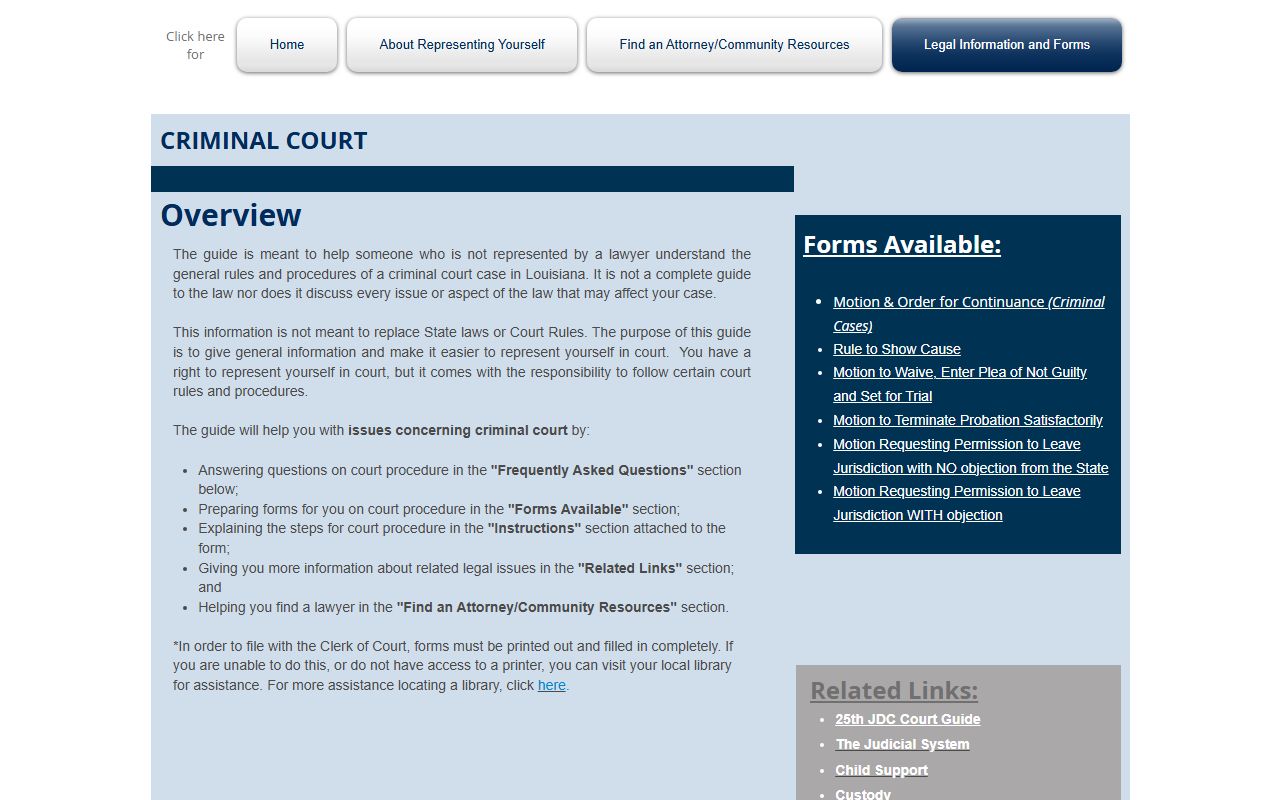
The 25th JDC self-help site provides a criminal court procedure source for local case-stage terms.
Search Plaquemines Parish Criminal Court Records
The main online index route is the Clerk's Cott eSearch portal. Criminal indices begin January 4, 1966, while criminal images begin September 6, 2006, with early years noted as coming soon in the research source. Guest access provides free indices only. It does not include docket information, image viewing, or image printing. Subscriber access is used when scanned criminal images are needed.
- Start with the Clerk eSearch criminal module for index access when the case is a filed court matter.
- Use the defendant name, known case number, date range, or case paperwork available from the court notice or citation.
- Check whether the result is only an index, an image-available record, or a record marked as not yet verified.
- Use the court calendar for arraignment, motion, pre-trial, trial, or sentencing timing when a date must be confirmed.
- Request a certified copy from the Clerk when the record must be used as official proof.
If the question concerns arrest paperwork, a warrant copy, mugshot, local background check, or crash-related DWI materials, PPSO Criminal Records is the correct custodian. That office is different from the Clerk's criminal case-file role.
Plaquemines Parish Criminal Case Stages
Criminal court records become easier to read when the case flow is clear. An arrest may start the path, but the court record begins to matter when the prosecutor files or pursues the charge in court. A case may end early through dismissal, move through a plea, or continue to trial and sentencing. Some records also continue after sentencing through probation, revocation, expungement, appeal, or post-conviction filings.
Case flow: Charges Filed › Arraignment › Pretrial / Motions › Plea or Trial › Disposition › Sentencing
| Stage | What the criminal court record may show |
|---|---|
| Charges filed | Bill of information, indictment, complaint, charge count, severity, and the prosecuting authority. |
| Arraignment | Reading or notice of charge and the defendant's plea, such as guilty, not guilty, or no contest. |
| Pretrial / motions | Discovery, suppression, continuance, bond, evidentiary, or procedural motions and related orders. |
| Plea or trial | Plea agreement, bench trial, jury trial, verdict, dismissal, acquittal, or amended charge outcome. |
| Disposition and sentencing | Final outcome, sentence, probation, fines, jail or prison term, restitution, and post-judgment activity. |
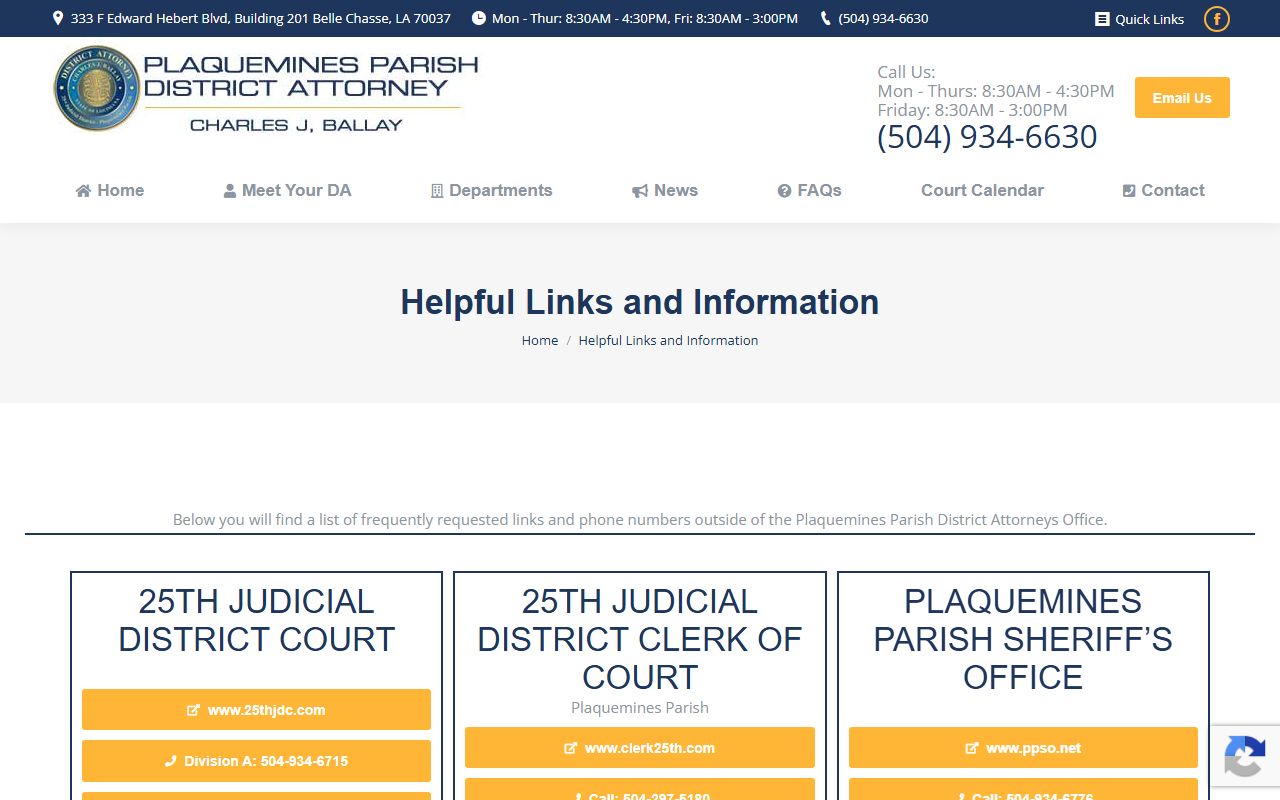
The District Attorney's helpful links page connects the court, Clerk, Sheriff, public defender, and DA roles.
Plaquemines Parish Criminal Record Fields
A Plaquemines Parish criminal court record should be read as a case history. It may contain filed charges that did not lead to conviction, motions that changed the course of the case, and sentencing terms that only appear after a plea or verdict. The record may also show whether the case is open, closed, continued, dismissed, disposed, sealed, expunged, transferred, or set for a later court event.
| Field | What It Shows |
|---|---|
| Case number | The court file identifier used by the Clerk and court notices. |
| Defendant | The person accused in the filed court case, not merely the person named in an arrest report. |
| Charge | The prosecutor-filed accusation, which may be amended, reduced, dismissed, or proven. |
| Arraignment and plea | The hearing where charges are presented and the defendant's response is entered. |
| Motions and hearings | Requests for court rulings, continuances, evidence issues, bond questions, or trial readiness. |
| Disposition | The outcome, such as dismissed, guilty plea, conviction, acquittal, or other final ruling. |
| Sentence | Jail, prison, probation, fine, restitution, conditions, or other court-ordered consequences after conviction. |
Criminal Court Charges vs Convictions
A criminal court record may show both accusations and outcomes. A charge is an allegation filed in court. It can be amended, reduced, dismissed, declined, or resolved by plea or trial. A conviction is a final finding or plea that carries legal consequences. Reading a charge line without the disposition can lead to a wrong conclusion about the case result.
| Point | Charge | Conviction |
|---|---|---|
| Meaning | Accusation filed or pursued in court. | Outcome after guilty plea, verdict, or equivalent finding. |
| Timing | Appears early in the prosecution. | Appears after final adjudication or plea. |
| Can change | May be amended, reduced, dismissed, or superseded. | May later be appealed, set aside, expunged, or affected by post-conviction orders. |
| Best record field | Charging document and docket activity. | Disposition, sentence, judgment, and minute entries. |
Louisiana criminal expungement law affects public access to qualifying criminal records.
Read Criminal Court Dispositions
The disposition is the outcome of a criminal case or charge. Common outcomes include dismissed, guilty plea, conviction after trial, acquittal, nolle prosequi, or sentence imposed. Louisiana terminology can vary by document, so a reader should look at the final order, minute entry, plea paperwork, and sentence record rather than relying on one abbreviated line.
Sentencing details may include probation, jail time, prison time, fines, court costs, restitution, credit for time served, or conditions. A person sentenced to state custody may later appear in Louisiana DOC records, while a person held before or during the case may appear in parish custody records. Court records, custody records, and arrest reports answer different questions.
Sealed vs Expunged Criminal Court Records
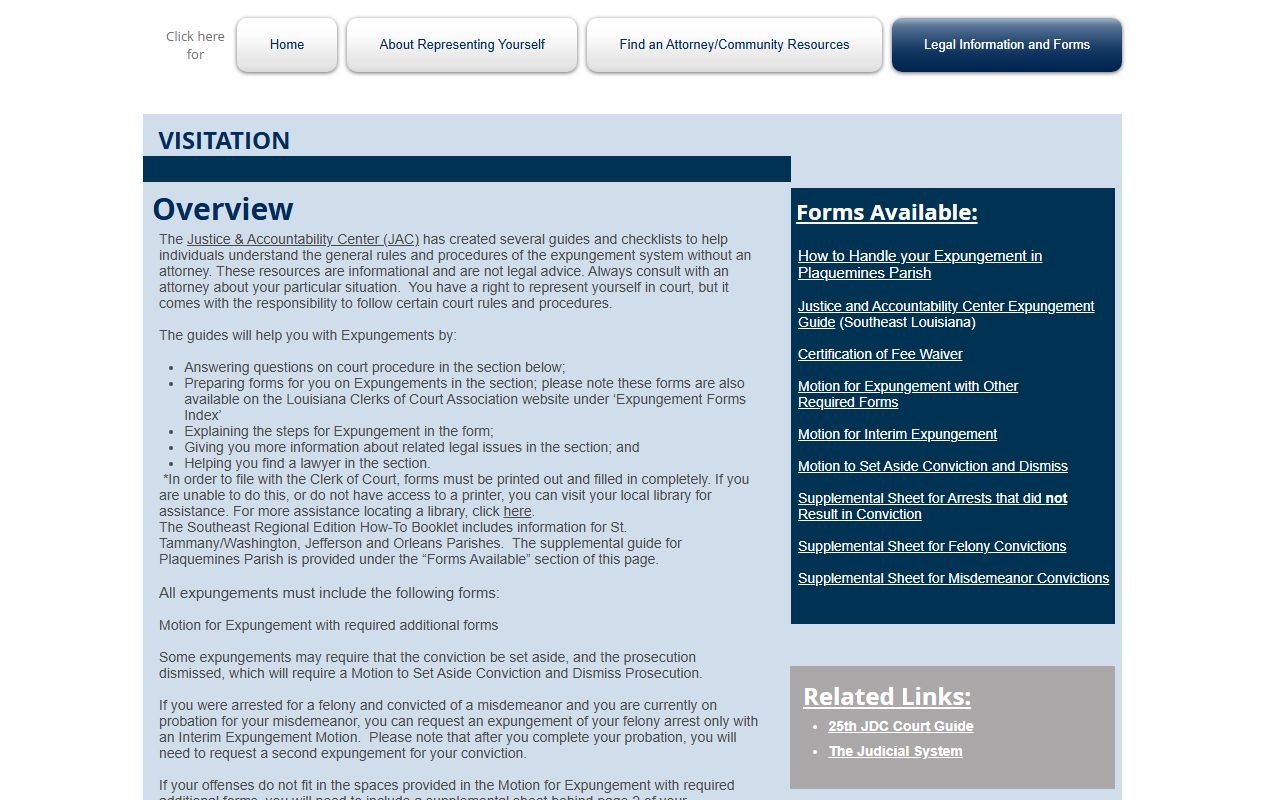
Public access to Plaquemines Parish criminal court records can change when a judge seals or expunges qualifying material. The 25th JDC self-help expungement page points users to Plaquemines supplements, Justice and Accountability Center guides, Louisiana Clerks of Court forms, fee-waiver certification, set-aside motions, interim expungement forms, and supplemental sheets. Those resources show that expungement is a court process, not an automatic database edit.
| Point | Sealed | Expunged |
|---|---|---|
| Public view | Removed from ordinary public access by court rule or order. | Public access is limited under Louisiana expungement procedures for qualifying matters. |
| Government access | Certain agencies or parties may retain limited access. | Some government or justice-system access may remain despite public limits. |
| How it happens | By statute, court rule, or court order. | By motion, required forms, eligibility review, and court action. |
| Practical limit | A sealed record should not be treated like an open case file. | Separate arrests or outcomes may require separate motions or later filings. |
The 25th JDC self-help site has an expungement resource page for local forms and guidance.
Plaquemines Parish Criminal Court Records Access
Plaquemines Parish criminal court records are generally accessed through the Clerk, while law-enforcement records route through PPSO. Louisiana public-records law supports many inspection and copying rights, and electronic record rules support official electronic records with proper handling of protected identifiers. The Clerk's eSearch disclaimer remains important because the portal says the online version is not the official public record.
Key access rules:
La. R.S. 44:32 sets custodian inspection and copying duties, subject to legal limits.
La. Ch.C. art. 412 restricts many juvenile records, so juvenile criminal matters should not be treated like adult case files.
Certified criminal court records should be requested from the Clerk. Background checks, arrest reports, local rap sheets, mugshots, and warrant copies are separate PPSO services and may have separate fees.
Criminal Court DA and Defender Context
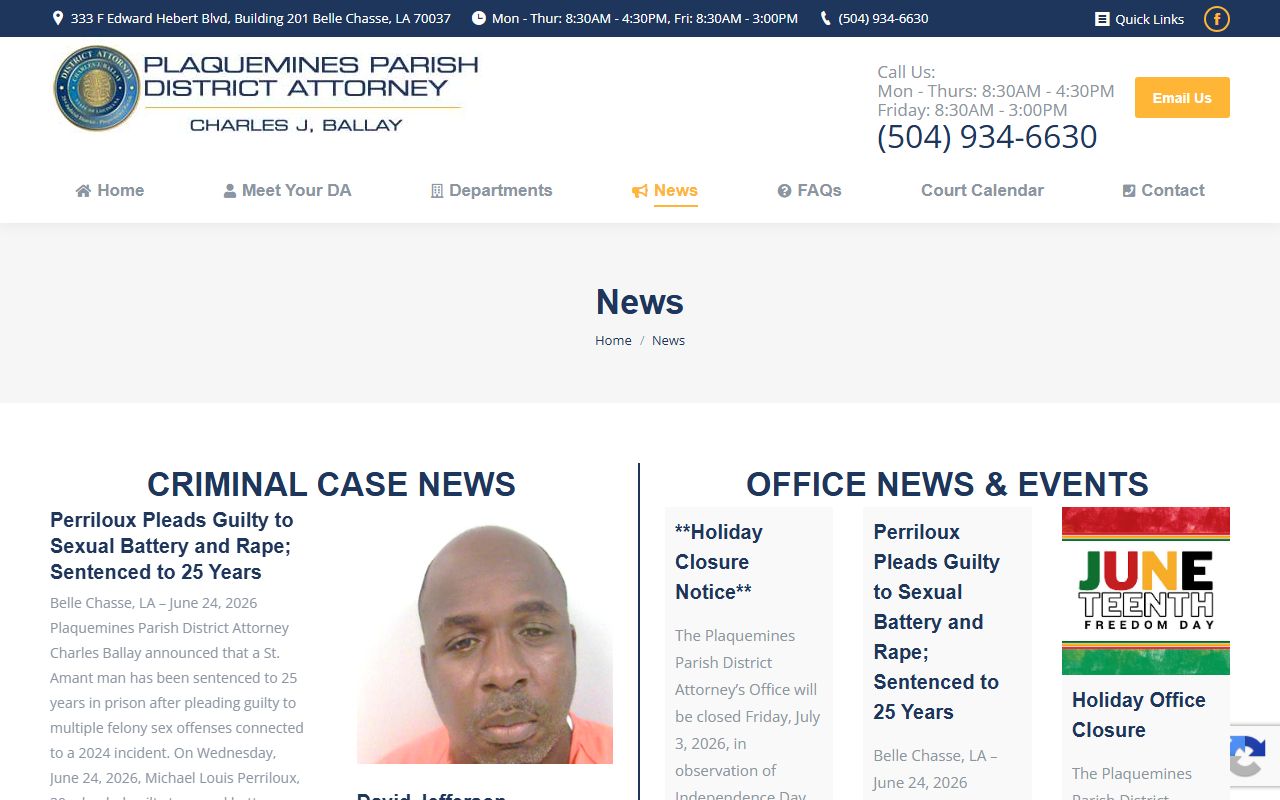
The District Attorney is central to Plaquemines Parish criminal court records because filed charges and plea negotiations flow through the prosecution. The District Attorney's office is led by Charles J. Ballay and lists a Belle Chasse main office plus a Pointe-a-la-Hache courthouse office by appointment. DA news posts also show how indictments, guilty pleas, and sentences become public case milestones after court action.
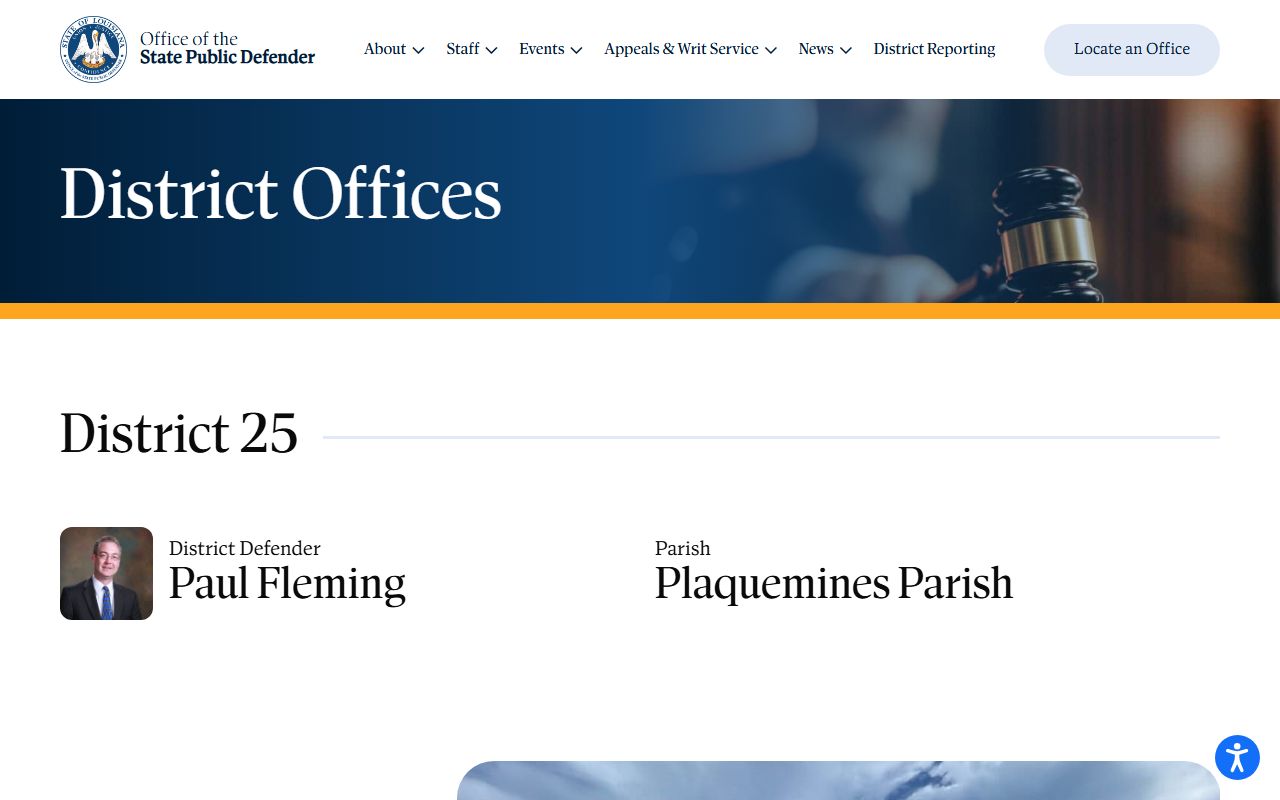
The District 25 public defender office serves eligible defendants in the 25th JDC. The state public defender profile lists the Belle Chasse office, hours, phone number, and local court count. That office context matters because appointed-counsel activity, motions, pleas, and hearings can all appear in the criminal court record, while attorney communications themselves are not public court records.
The state public defender profile for District 25 gives local office information for Plaquemines Parish criminal defense.
Restricted Plaquemines Parish Criminal Court Records
Juvenile records, sealed records, expunged records, adoption-linked material, mental-health information, victim-safety details, protected personal identifiers, and some active investigative material may be withheld or redacted. A released index entry does not mean every document in the file is open. If the eSearch status says "In Progress," the portal has not verified the record for general public viewing.
News posts can report indictments, pleas, or sentences, but they are not the official case file. To verify a criminal disposition, use the Clerk's record, court minutes, judgment, sentence, or certified copy. To verify custody, use the parish jail, VINELink, Louisiana DOC, or federal custody source depending on where the person is held.
The District Attorney's news page shows examples of indictments, pleas, and sentences as public announcements.